What is temperature?
Temperature can be define in many ways, some of which are the following:
- The degree of hotness or coldness of a body or environment.
- A measure of the warmth or coldness of an object or substance with reference to some standard value.
- A measure of the average kinetic energy of the particles in a sample of matter, expressed in terms of units or degrees designated on a standard scale.
- A measure of the ability of a substance, or more generally of any physical system, to transfer heat energy to another physical system.
 Definition #2 is very similar to definition #1, but we can extend this definition to the use of measuring instruments such as thermometer. The unit of temperature when using a thermometer is degree centigrade, one can infer from the word centigrade that this particular instrument has 100 graduation. The reference point in this instrument the freezing point of water assigned as 0 degree centigrade and the boiling point of water set at 100 degree Centigrade.
Aside from the degree centigrade, there are other ways to report temperature such as degree Fahrenheit and Kelvin, the absolute temperature scale. Study the image above and tell us what you think about the relationship among the temperature scales.
Definition#3 defines temperature at the microscopic level. This definition suggests that we can infer based from the temperature of an objective how fast the molecules that compose it are. The term average is justified by the fact that it virtually is impossible to measure the kinetic energy of individual molecules so we resort to measuring the average kinetic energy discounting the fact that some molecules may be more energetic than the rest of system.
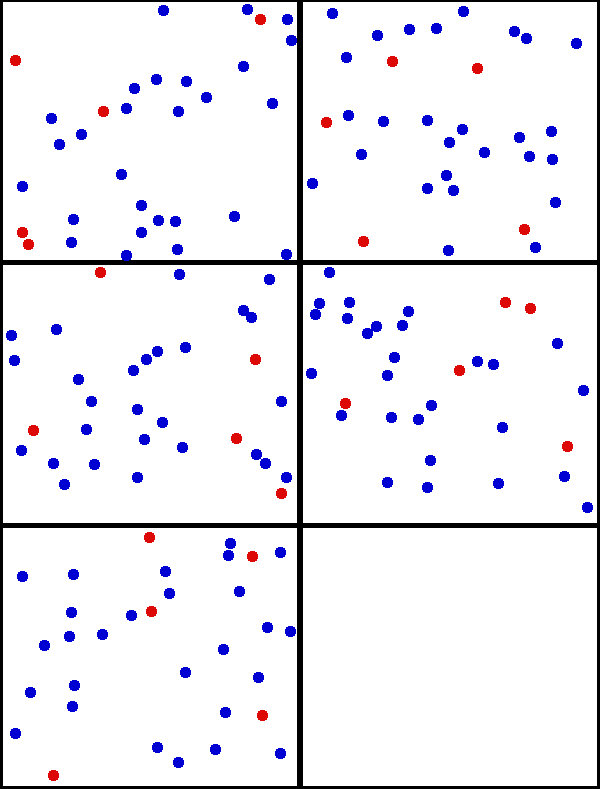
Observe the box above. The movement of the molecules (represented by the dot) creates what we call as temperature. Specifically, the collision of molecules with each other and with the sides of the box results to release of energy that we sense as temperature. What do you think will happen to temperature as the molecules get faster?
Definition #4 is an extension of definition #3. Have you ever tried touching a hot pot? How did you feel? Exactly! That is because of the so-called heat transfer. Well, for technical reasons, instead of saying heat transfer, we'll call it thermal energy transfer (heat is a mechanism of energy transfer and not a form of energy in itself). What actually happens when you touch a hot pot? Basically, some of its energy will transfer to you hand. When that happens, the molecules in your hand will have more kinetic energy (move faster, collide more often) and the friction the molecules create is what you perceive as the burning sensation. How about the cold sensation you feel when you touch an ice? Well, it's because of your hand is losing some of its energy to the ice cube. Watch the video below and tell us what you think about the mechanisms of heat transfer.

Very Good!
ReplyDeletenice blog.. pls continue updating your blog.. I'm a follower of yours... :)
ReplyDeleteNice one keep it up...
ReplyDeletenice layout! keep it up!
ReplyDeletewow very interesting. Keep it up. Thumbs up
ReplyDeletenice animation you have! really makes it easier to understand. keep it up!
ReplyDelete